Chicken Roasters POS for Panama
Yakuma POS is built for chicken rotisseries and takeaway concepts that manage intense peak hours. Tailored for businesses in Panama.
Request Demo for Panama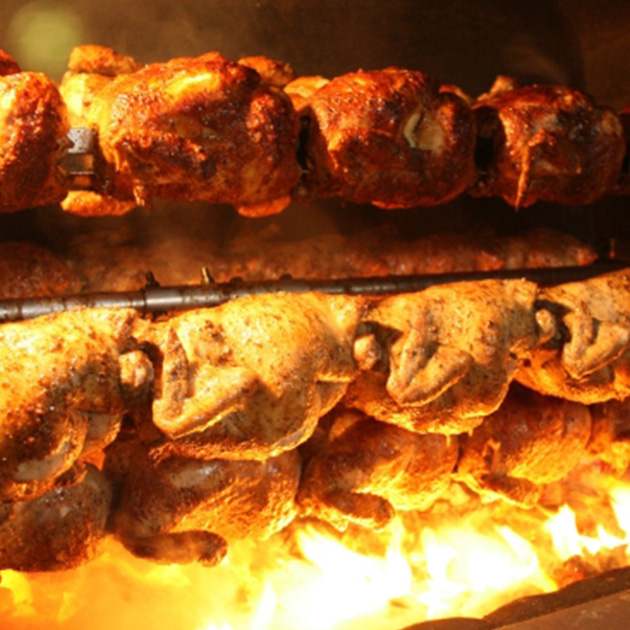
Built for Panama
Yakuma provides enterprise POS solutions designed for the Panamanian market. Our platform handles DGI fiscal requirements, dual-currency operations, and the cash-intensive realities of local retail and hospitality. From Panama City shopping centers to restaurant chains across the country, Yakuma delivers compliant, reliable systems.
Regulatory compliance
- DGI fiscal equipment compliance
- Authorized invoice issuance
- Electronic invoicing support
- Fiscal receipt traceability
- Tax reporting integration
Payment integrations
- Local bank terminal integration
- Cash handling controls
- USD and Balboa support
- Mobile payment options
Local integrations
- Panamanian accounting software
- Multi-location management
- Inventory control systems
- Local supplier networks
Supporting Panamanian businesses with DGI-compliant POS solutions across retail and hospitality sectors.
Local terminology:
Rotisserie and takeaway pain points
Peak hours create long queues and lost sales when the system is slow.
Orders for portions and side dishes are miscounted or confused.
Production planning is done by intuition rather than data.
How Yakuma supports chicken roasters
Fast POS interface tailored to rotisserie product mixes and combos.
Clear product structure for whole, half, and quarter chickens plus sides.
Production suggestions based on historical sales by day and time.
Wondering how Yakuma compares to other POS solutions?
See Yakuma vs Competitors ComparisonWhy leading retailers never use generic POS systems
Generic POS platforms are not bad products. They work well for single-location businesses and standardized operations — especially when the Internet is always available and the store can depend on a cloud service to function.
But serious chains do not operate that way.
This difference is often dismissed as a matter of scale. It is not.
It is a structural difference in how the business operates.
A chain is not a bigger store.
It is a different system.
Single store operator
- • Makes decisions locally
- • Knows staff personally
- • Adjusts prices manually
- • Fixes issues by being present
- • Treats the POS as a tool to save costs
Multi-location operator
- • Manages consistency, not physical presence
- • Hires managers, not frontline staff
- • Defines rules centrally and applies them across locations and channels
- • Cannot "just go to the store" to fix issues
- • Uses the POS as a critical execution layer for growth, control, and scale
Yakuma is not a generic POS. Yakuma is built for a different category of business.
Enterprise POS Fundamentals
Not features. Requirements.
If your current POS cannot do these things, it is not built for enterprise operations.
Do I need to throw away my existing POS terminals to move ahead with Yakuma?
No. Yakuma is designed to preserve your hardware investment. If a terminal runs Windows and meets minimal specs, it can run Yakuma. Some customers still run terminals from Windows 2000 era.
When should a chain replace its current POS?
A chain should replace its POS when growth forces it to rely on multiple disconnected tools just to operate. If your POS, website, apps, loyalty, and marketing all come from different vendors—or require additional third-party add-ons—execution is already compromised.
These are not edge cases. They define whether a POS is enterprise-grade or not.
Running real chains. Every day.
"Yakuma has powered our chain since 1999. Zero outages and total flexibility."
Restaurant chain owner
Italy
"Every new store launches in minutes with our custom templates."
Retail operations manager
Spain
"We replaced a major US vendor with Yakuma and cut costs by 60%."
Franchise director
Canada
We can connect you with real operators running Yakuma in production.
Request an introductionReady to Transform Your Chicken Roasters Business in Panama?
Get a customized demo tailored to your requirements in Panama.
Request Demo